

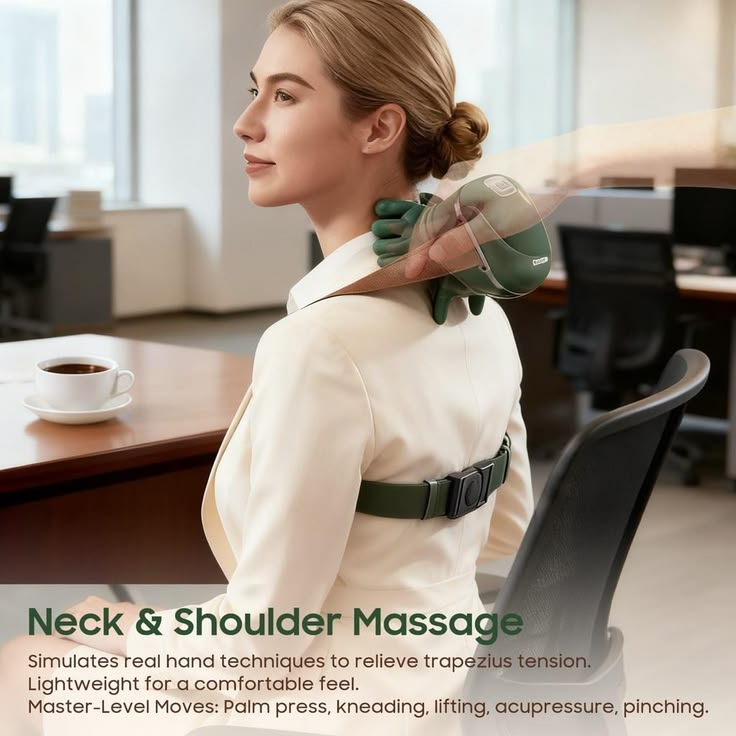
Neck pain has become one of the most common modern discomforts, largely driven by long hours of screen use, sedentary work habits, and poor posture. The cervical spine, which supports the head and enables a wide range of motion, is especially vulnerable to strain. When this region is overworked or held in unnatural positions for too long, it can lead to stiffness, reduced mobility, headaches, and chronic tension.
In response to this widespread issue, massage technology has evolved toward more intelligent, anatomically aware systems. One of the most advanced developments is the 4D massager with scientific zoning, designed specifically to match the natural contours of the cervical spine. Unlike traditional massage devices that apply uniform pressure, these systems are engineered to adapt to different muscle zones in the neck for more precise and effective relief.
Understanding the Cervical Spine and Neck Strain
The cervical spine consists of seven vertebrae that support the head and allow for movement in multiple directions. Surrounding these vertebrae are complex layers of muscles, tendons, and ligaments that work together to stabilize and move the neck.
Because this area is highly flexible and constantly active, it is also prone to tension. Poor posture, such as forward head positioning while using a computer or phone, places excessive load on the neck muscles. Over time, this leads to muscular imbalance, tightness in the upper trapezius, and pressure on deeper cervical structures.
Muscle fatigue in the cervical region is not just uncomfortable; it can also affect concentration, sleep quality, and overall physical performance.
What Is Scientific Zoning in Massage Technology?
Scientific zoning refers to the segmentation of massage areas into distinct regions based on anatomy and muscle behavior. Instead of treating the neck as a single uniform surface, the device identifies different zones that require different types of pressure and movement.
In the context of the cervical spine, scientific zoning typically divides the area into upper neck support zones, mid-cervical tension zones, and shoulder transition zones. Each zone responds differently to pressure, so a one-size-fits-all approach is not effective for deep relief.
4D massagers use this zoning principle to adjust their motion patterns in real time, ensuring that each area receives appropriate stimulation Bionic Finger Neck and shoulder massager
.
How 4D Technology Enhances Precision
The “4D” aspect of these massagers refers to their ability to vary speed, depth, direction, and timing. This creates a dynamic massage experience that closely mimics human hands.
Variable Depth Control
One of the key features of 4D massagers is adjustable depth. The massage nodes can extend deeper into muscle tissue or remain at a lighter surface level depending on the zone being targeted.
In the cervical region, deeper pressure is often needed near the upper trapezius, while gentler contact is more appropriate near sensitive vertebral areas.
Adaptive Movement Patterns
Unlike traditional devices that follow fixed cycles, 4D massagers change their movement rhythm based on muscle response. This allows them to shift between kneading, rolling, and pressing techniques depending on the specific zone.
This adaptive behavior helps prevent muscle adaptation and improves overall effectiveness.
Speed Variation for Muscle Response
Different neck zones respond differently to pressure speed. Tight muscle bands may require slower, deeper pressure, while surrounding tissues benefit from faster rhythmic stimulation.
4D systems adjust speed automatically to optimize relaxation and release tension more efficiently.
Matching the Cervical Spine’s Natural Structure
The effectiveness of scientific zoning lies in its alignment with the anatomy of the neck. The cervical spine is not a flat surface; it is a curved, highly mobile structure supported by layered muscle groups.
Upper Cervical Zone
This area supports the base of the skull and is often associated with tension headaches and stiffness. 4D massagers apply gentle, controlled pressure here to avoid overstimulation while promoting relaxation.
Mid Cervical Zone
The mid-neck region contains muscles responsible for head rotation and posture stability. This area often accumulates stress from prolonged screen use. Deeper kneading motions are typically applied here to release tight fibers.
Cervical-Shoulder Transition Zone
This is one of the most common areas for muscle knots. It connects the neck to the shoulders and carries significant postural load. 4D massagers apply stronger, rhythmic pressure in this region to break down deep tension and improve mobility.
Why Uniform Massage Falls Short
Traditional massagers often apply consistent pressure across the entire neck area. While this may provide temporary relief, it does not account for the differences in muscle density and sensitivity across cervical zones.
Uniform pressure can either be too weak for deep muscle knots or too strong for sensitive areas, leading to suboptimal results.
Scientific zoning solves this issue by tailoring massage intensity and movement to the specific needs of each anatomical region.
Benefits of Zoned 4D Massage for the Neck
The combination of anatomical awareness and advanced motion control offers several key benefits.
Improved Muscle Relaxation
Targeted pressure allows tight muscle fibers to release more effectively, reducing stiffness and discomfort.
Reduced Neck Pain and Headaches
By addressing tension in both upper and mid-cervical zones, these devices can help reduce tension-related headaches and neck pain.
Better Posture Support
Relaxed neck muscles make it easier to maintain proper head alignment, reducing strain on the spine.
Enhanced Circulation
Zoned massage improves blood flow in specific areas, supporting muscle recovery and reducing fatigue.
The Role of Real-Time Adaptation
One of the most advanced aspects of modern 4D massagers is their ability to respond to muscle resistance. As they move across different cervical zones, sensors or programmed patterns adjust pressure levels automatically.
This ensures that each area receives optimal stimulation without requiring manual adjustments from the user.
A Smarter Approach to Neck Care
Neck pain is often the result of long-term habits rather than isolated incidents. Treating it effectively requires more than general relaxation; it requires targeted, anatomically informed therapy.
Scientific zoning in 4D massagers represents a shift toward smarter, more personalized muscle care. By aligning massage techniques with the natural structure of the cervical spine, these devices offer more precise and effective relief than traditional approaches.
Precision Meets Comfort in Modern Massage Design
The evolution of massage technology has moved from simple mechanical motion to intelligent, body-aware systems. 4D massagers with scientific zoning demonstrate how engineering and anatomy can work together to improve everyday wellness.
By matching the contours of the cervical spine and adjusting pressure across different muscle zones, they deliver a more refined and therapeutic experience.
For individuals dealing with persistent neck tension, this approach offers a practical, efficient, and scientifically grounded way to restore comfort and mobility in daily life.