

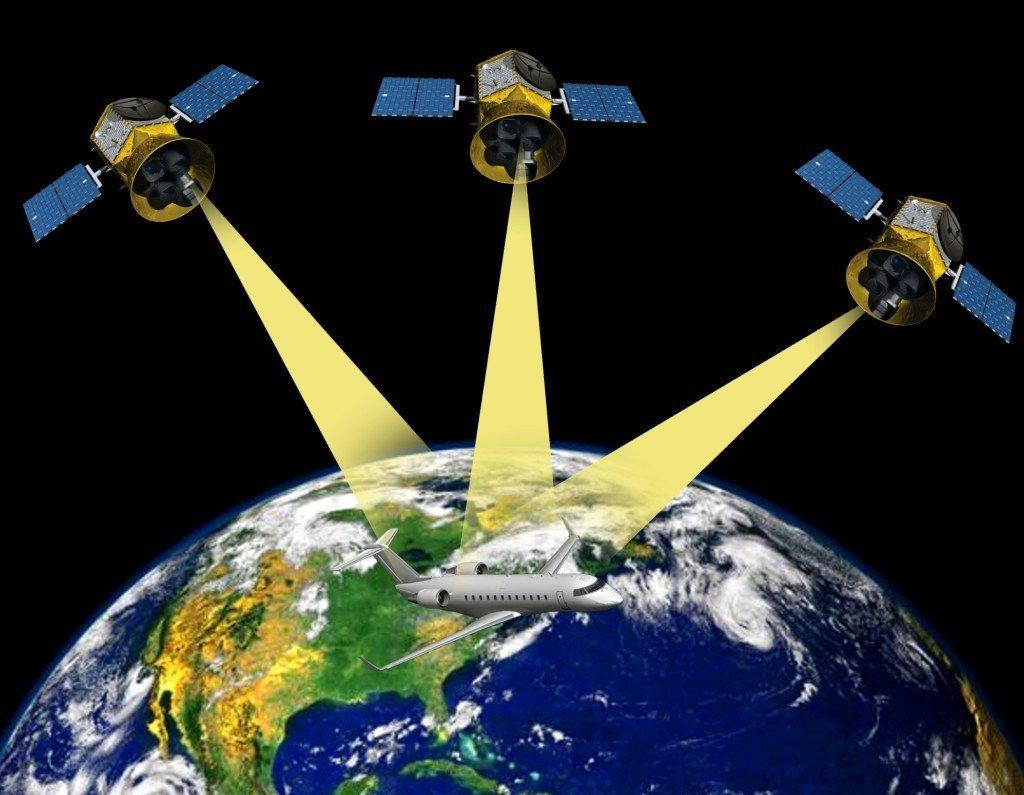
Global Navigation Satellite Systems (GNSS) have revolutionized the way we navigate the world. Initially developed for military applications, GNSS technology has evolved to become a critical part of everyday life. From guiding airplanes through the skies to helping drivers find the quickest route on their smartphones, GNSS systems are now integral to numerous sectors. In this article, we explore the history and evolution of gnss positioning system, focusing on how they transitioned from military use to civilian applications.
1. Introduction to GNSS
GNSS refers to a network of satellites that send signals to Earth, which are then used to determine precise locations and timings. The most prominent GNSS systems today are GPS (Global Positioning System), GLONASS (Russia), Galileo (European Union), and BeiDou (China). These systems allow users to determine their location anywhere on Earth with an accuracy that has improved over time.
2. Early Beginnings: Military Origins
The origins of GNSS can be traced back to military needs during the Cold War era. In the 1960s, the United States developed the first satellite navigation system, known as Transit, for the U.S. Navy. This system helped submarines determine their positions while submerged, allowing for accurate navigation across vast oceans.
In the 1970s, the development of GPS began as a response to military requirements for accurate and reliable positioning during military operations. GPS was designed to improve on earlier systems, such as the Transit, which had limitations in terms of coverage and precision. In 1978, the first GPS satellite was launched, and by the mid-1980s, the system became operational.
3. The Transition to Civilian Use
While the primary purpose of GPS was initially military, it didn’t take long for the technology to be adapted for civilian use. In the early 1990s, the U.S. government decided to make GPS signals available to civilians for free, as a way to encourage the development of commercial applications.
3.1. Commercial Expansion
The decision to open GPS to civilians was a game-changer. The technology began to be used in a wide range of industries, including transportation, agriculture, and surveying. For example, GPS navigation quickly found its way into consumer vehicles, making driving more efficient and less reliant on traditional paper maps.
In the following decades, GPS-enabled devices became ubiquitous. Smartphones with integrated GNSS receivers became standard, providing users with access to real-time navigation on demand. As GPS technology continued to improve, its accuracy also enhanced, allowing for applications in precision farming, emergency services, and even mobile gaming.
3.2. International Competition and Collaboration
The success of GPS spurred other nations to develop their own GNSS systems. Russia’s GLONASS was the first competitor to GPS, followed by the European Union’s Galileo and China’s BeiDou system. Although these systems were initially developed for national security reasons, their applications quickly expanded to civilian purposes, contributing to a more globalized GNSS ecosystem.
The international GNSS systems today work together in what is often referred to as “multi-constellation navigation.” This collaboration helps improve the accuracy, reliability, and availability of positioning data. Civilian users now have access to multiple GNSS systems simultaneously, which provides redundancy and enhances performance.
4. Advances in GNSS Technology
The evolution of GNSS positioning systems has not only been about broadening their availability but also improving their accuracy and functionality. Several technological advancements have played a key role in this progress:
4.1. Increased Accuracy and Precision
In the early days, GNSS systems were only accurate to within several meters. However, modern GNSS systems can now achieve centimeter-level accuracy. Techniques like Differential GPS (DGPS) and Real-Time Kinematic (RTK) positioning are used for applications that demand high precision, such as in construction, agriculture, and geospatial surveys.
4.2. The Rise of Augmented Systems
To further improve the accuracy and reliability of GNSS, augmentation systems have been developed. For example, the U.S. introduced the Wide Area Augmentation System (WAAS) to provide more accurate and reliable positioning for aviation. Similarly, the European Union’s EGNOS system supports GNSS in the European region. These augmentation systems have made GNSS positioning safer for aviation and other critical infrastructure.
5. The Future of GNSS
As we look to the future, GNSS technology continues to evolve with the development of next-generation systems. The integration of new signal frequencies, enhanced global coverage, and stronger resistance to interference are just a few of the improvements on the horizon.
The upcoming launch of new satellites and more advanced ground infrastructure promises to push the limits of what GNSS can achieve. As our dependence on these systems grows, so too will the need for more precise, reliable, and secure navigation systems. This will lead to more applications in emerging fields like autonomous vehicles, drones, and smart cities.
6. Conclusion
The evolution of GNSS positioning systems has been nothing short of revolutionary. From its early days as a military tool designed for precise navigation in wartime to its widespread use in civilian applications, GNSS technology has become a cornerstone of modern life. Today, GNSS is an essential tool for navigation, communication, and countless other industries. As the technology continues to evolve, we can expect even greater advancements that will further transform the way we live, work, and interact with the world around us.
